We use cookies to make your experience better. To comply with the new e-Privacy directive, we need to ask for your consent to set the cookies. Learn more.

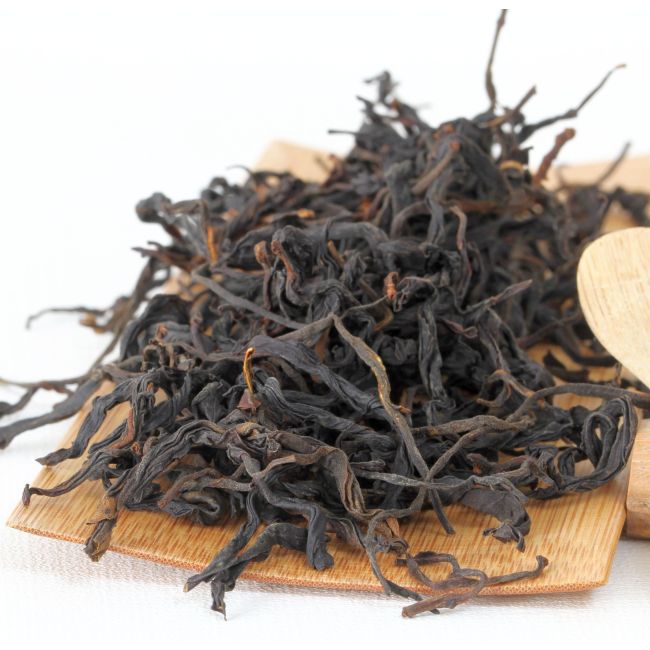


Yesheng Zi Ya
Delivery Time
deliverable instantly
(=€435.00 / 1 kg)
A premium tea with an overwhelming aroma. Wild-harvested from a species of tea tree whose leaves develop a natural, purplish hue. Very aromatic, with exceptional nuances and subtle acidity. The harvest takes place very early in the year and is done by hand. Picked in the pristine mountain forests of Zhenglang and then carefully processed in an iron wok by tea master Xiao Yu. The ancient tea trees grow scattered among diverse forest vegetation at elevations of 1,400–1,900 meters in a unique microclimate.
In stock
SKU
yesheng-zi-ya
 Origin:
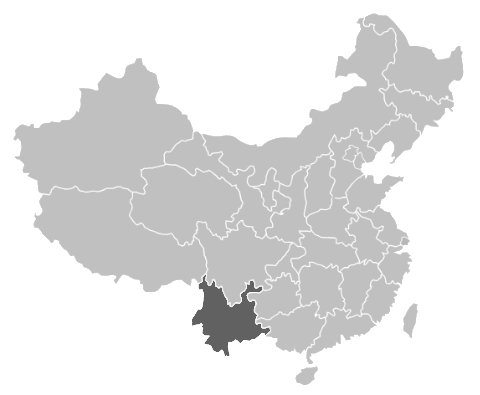
Zhanglang / Yunnan / China
Recommendation for the preparation: |
 |
 |
| ca. 8 g / litre | >3 min | 100 ℃ |
With this highly aromatic tea, it’s best to use a balancing method when brewing. This works best with a small teapot (about 150 ml) for steeping the tea and a larger serving vessel (about 400 ml). The serving vessel should hold about three fillings from the teapot. Add about 5 g of tea to the teapot. Do not rinse the leaves. Pour hot water over the tea for 30 seconds, 40 seconds, 50 seconds, 60 seconds...
The tea will balance out in the serving vessel, and you can drink about half of it. Then, immediately prepare another infusion using the teapot and keep refilling the tea in the serving vessel. This achieves a very nice balance in the tea’s infusion.
The simplest method is to simply pour one liter of water over 8 grams of tea. This is best done in a glass teapot. After about 3 minutes, begin drinking the tea slowly. The leaves remain in the glass teapot and tend to sink to the bottom, so a strainer is not necessary.
Feb. 2026
Volume discount:You will receive a discount of up to 10 percent on the purchase of our teas. Details can be found here.
A unique tea made from natural purple leaves
The purple tea leaves of Yesheng Zi Ya
What makes this tea unique are its naturally purple tea buds. In the ancient tea forests, only a few tea trees naturally produce young shoots that are purple to reddish in color. This distinctive color is caused by anthocyanins, which form naturally in the young buds and leaves. The intense sunlight at this low latitude, the altitude, and the unique mountain microclimate all combine to influence the growth of the tea trees and the characteristics of their young shoots. The purple buds appear only at a specific time of year, namely in early spring from January through February. Since the tea trees grow widely scattered throughout the forest, the buds must be harvested by hand in the wild.
For particularly tall tea trees, one must climb the trees. After the harvest, Xiao Yu’s father took over the fermentation of the tea leaves. This tea is produced by the local people with great care and dedication and is an expression of the village’s traditional tea culture.
Tea Master Xiao Yu
This variety is exceptional. We also compared it with teas from several producers in the region. The teas from tea master Xiao Yu won us over by a wide margin. She places the utmost importance on carefully selecting the right trees, which grow only sporadically in a large forested area. Only the families themselves know the exact locations. As a result, the flavor profiles of her teas are outstanding. In February 2026, we therefore launched our first harvest project with Xiao Yu. With the help of cooperating tea farmers, Xiao Yu and her family harvested and produced the tea for us. Like all of our teas, this batch is tested in a laboratory and is free of any residues. The family belongs to the Blang ethnic group. According to their tradition, the daughters bear the family name Yu (玉), while the sons bear the family name Ai (岩). According to historical accounts, the Blang have been using tea for about 3,000 years. There are many ancient stories and legends surrounding tea in that region. The family looks back on a long tradition of tea picking and tea production.
The Village of Zhanglang
Zhanglang is an ancient village with a history spanning more than a thousand years. Today, about 200 families live there. The village has preserved its own language and traditional way of life to this day. Theravada Buddhism and its respect for all living beings have also deeply shaped the daily lives and values of the people. Tea trees are seen as an integral part of life and the natural environment.
For generations, the villagers have been growing tea in the mountain forests, harvesting the leaves, and processing them into tea. The tea trees have belonged to local families and villagers for generations. The proceeds from the sale of the tea therefore directly benefit the tea farmers who grow, tend, harvest, and process it. The villagers have not cleared the forest to create uniform industrial tea plantations. Instead, they have chosen to let the tea trees grow alongside the original forest. This relationship between people, the forest, and the tea tree—which has developed over a long period of time—did not arise as a reaction to the modern concept of “sustainability.” Rather, it is an expression of a way of life in harmony with nature that has been preserved by the people of Zhanglang for millennia and passed down from generation to generation.
For generations, the villagers have been growing tea in the mountain forests, harvesting the leaves, and processing them into tea. The tea trees have belonged to local families and villagers for generations. The proceeds from the sale of the tea therefore directly benefit the tea farmers who grow, tend, harvest, and process it. The villagers have not cleared the forest to create uniform industrial tea plantations. Instead, they have chosen to let the tea trees grow alongside the original forest. This relationship between people, the forest, and the tea tree—which has developed over a long period of time—did not arise as a reaction to the modern concept of “sustainability.” Rather, it is an expression of a way of life in harmony with nature that has been preserved by the people of Zhanglang for millennia and passed down from generation to generation.
Terroir and Ecosystem
The village of Zhanglang is located in the Bada Mountains near Xishuangbanna in China’s Yunnan Province (approximately 21.8° north latitude and 100.1° east longitude) and lies in a region that is historically significant for its ancient tea tree populations.
The tea trees here do not grow in uniformly laid-out plantations but are scattered throughout mountain forests at an elevation of about 1,400–1,900 meters. Ancient tea trees coexist with tall trees, wild orchids, ferns, and numerous native plants. This creates an extremely species-rich forest-garden ecosystem (agroforestry).
Many of these tea trees are between one hundred and five hundred years old. Unlike the low-growing shrubs of modern tea plantations, which are regularly pruned by hand, the old tea trees here have retained their natural, tree-like growth form. They can grow several meters tall, and in some cases even exceed ten meters.
Over many decades and centuries, their root systems have spread deep into various soil layers, where they absorb nutrients from the humus-rich forest soil as well as natural minerals.
Zhanglang is located in a unique climatic transition zone between tropical Southeast Asia and subtropical East Asia. Its low latitude ensures high levels of solar radiation, while its high elevation results in a comparatively cool mountain climate. Mountain fog, shade from the forest, and pronounced temperature differences between day and night combine here to create a unique and virtually irreproducible microclimate.
Many of these tea trees are between one hundred and five hundred years old. Unlike the low-growing shrubs of modern tea plantations, which are regularly pruned by hand, the old tea trees here have retained their natural, tree-like growth form. They can grow several meters tall, and in some cases even exceed ten meters.
Over many decades and centuries, their root systems have spread deep into various soil layers, where they absorb nutrients from the humus-rich forest soil as well as natural minerals.
Zhanglang is located in a unique climatic transition zone between tropical Southeast Asia and subtropical East Asia. Its low latitude ensures high levels of solar radiation, while its high elevation results in a comparatively cool mountain climate. Mountain fog, shade from the forest, and pronounced temperature differences between day and night combine here to create a unique and virtually irreproducible microclimate.
Why is Zhanglang tea virtually unknown in Europe?
Tea from Zhanglang is traditionally harvested and processed only in a small area comprising individual villages and tea-farming families. The tea farmers have extensive experience in growing, harvesting, and processing tea. Production is intended solely for the local market. At the same time, the limited harvest volumes and decentralized production mean that such teas are difficult to bring to the European market through standardized trade channels and in large quantities, as is customary with tea from large plantations. For this reason, Zhanglang tea has so far been primarily popular in China among Chinese tea enthusiasts and connoisseurs.
Production and packaging:

Packaging sizes
100% handmade. We get this tea directly from small producers and tea farmers in China. The tea is grown and processed in a traditional way. Such high qualities are usually produced by the tea farmers only for the local Chinese market. Therefore we are regularly on site with the producers. The direct contact to the tea farmers enables us to offer very reasonable prices with outstanding tea quality. All our teas are checked for pesticide residues by an independent laboratory. We deliver the tea in re-sealable and aroma-safe stand-up pouches made of ALU/PE.
| Delivery Time | deliverable instantly |
|---|
Write Your Own Review